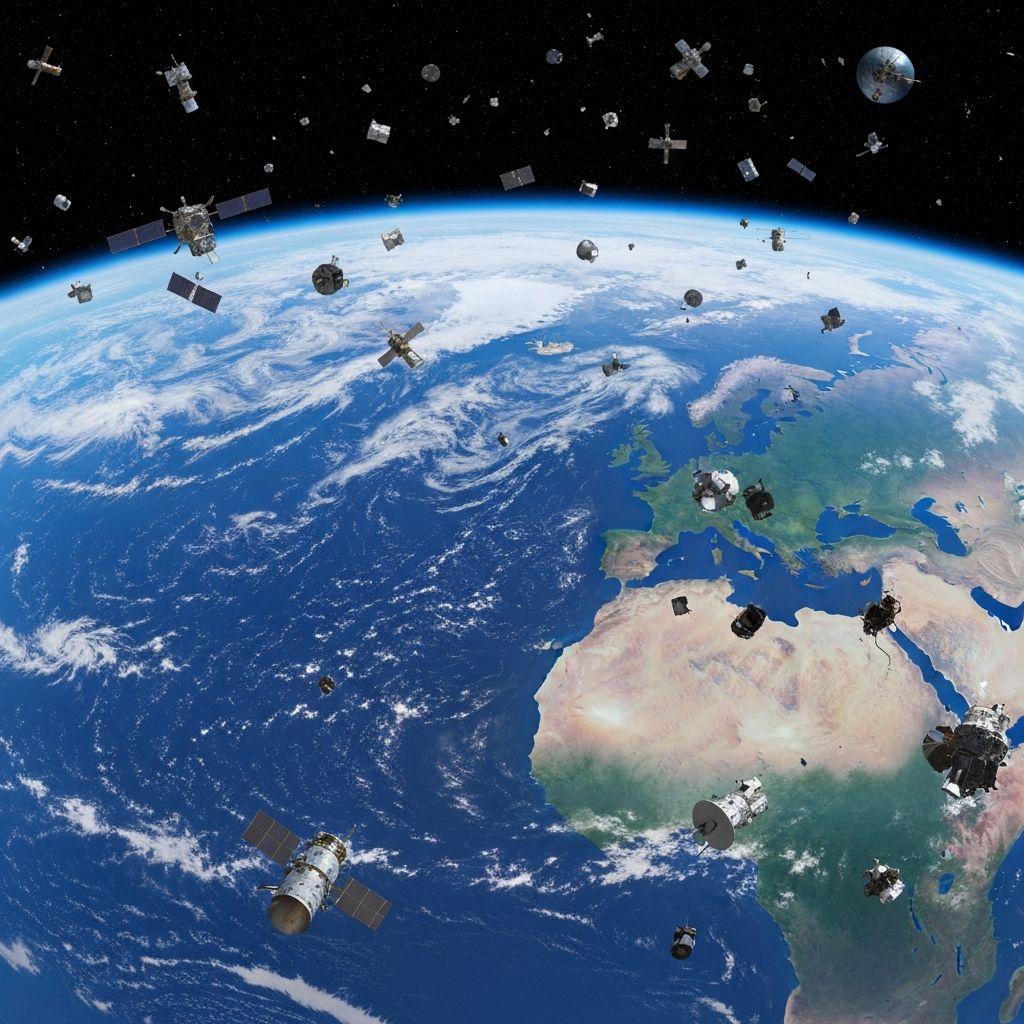
Innovation in space is happening at an unprecedented pace. Startups like Reflect Orbit and Aetherflux are tackling major challenges, from renewable energy to satellite technology. The excitement is real—and for good reason—but there's a catch: space currently has no clear rules or limits, and as a result, we're slowly dumping more and more debris into orbit without thinking about how to remove it later.
Every new satellite, solar array, or experimental technology adds to the clutter. While companies race to become the leaders in space-based innovation, we risk interfering with essential scientific tools, like meteor detectors and telescopes, which rely on clear, unobstructed skies. Too much light and debris in orbit can diminish their effectiveness and jeopardize long-term research.
This raises a critical question: are we repeating the same mistake we've made on Earth? Are we so focused on short-term gains that we fail to consider the long-term consequences for future generations?
Space Cannot Clean Itself
Space is the ultimate frontier, but unlike Earth, it cannot "clean itself." The decisions we make today—where we launch, how we design, and whether we plan for eventual removal—will shape the accessibility and safety of space for decades to come.
The time to act is now, not when the problem becomes irreversible. Cleaning up space isn't just about preserving innovation—it's about responsibility, foresight, and safeguarding the universe for those who come after us.